What Is Roman Style Pizza: Italian Roman Pizza For Everyday Street Food
Pizza is one of Italy's most recognised foods, but its characteristics change considerably between regions. Naples is often the city most closely associated with Italian pizza, yet Rome has developed an equally distinctive pizza tradition. In Rome, that tradition grew not only through pizzerie, but also through bakeries, neighbourhood pizza shops and foods prepared for everyday eating. Over generations, Roman bakers and pizzaioli developed their own approach to flour, water, fermentation and baking, with a particular emphasis on achieving crispness rather than the softer, more flexible texture traditionally associated with Neapolitan pizza.
This difference is central to What Is Roman Style Pizza. Rome is known for several formats, from the very thin pizza tonda romana to rectangular tray-baked pizza with a more aerated crumb. Pizza tonda romana is thin, firm and distinctly crisp across the base, while Roman tray pizza combines a crunchy base with a lighter, softer centre. These contrasting textures come from differences in hydration, fermentation, shaping and baking, showing how Roman pizza developed its own identity within Italy's broader pizza culture.
What Is Roman Style Pizza?
Roman style pizza is recognised primarily for its emphasis on structure and crispness. For anyone exploring What Is Roman Style Pizza, the traditional pizza tonda romana provides one of the clearest examples. It is a round pizza with an exceptionally thin base, crisp edges and very little raised crust. It is sometimes described as scrocchiarella, referring to the characteristic crunch produced when the baked dough is bitten or broken. Unlike a soft pizza that bends easily, a properly baked Roman round pizza maintains a firmer structure.
On the other hand, Roman tray pizza produces a different result. Its dough generally contains considerably more water, creating an open internal crumb while the bottom becomes crisp during baking. This contrast between a crunchy exterior and aerated centre is one of the defining qualities of modern Roman tray pizza.
The Different Types of Roman Style Pizza
The term Roman pizza covers several established formats. Pizza tonda romana is the thin, round style traditionally served whole in pizzerias. Pizza in teglia is baked in rectangular metal trays and develops a more aerated structure. Pizza al Taglio describes pizza sold by the cut, commonly from larger rectangular trays. Rome also has a strong tradition of pizza bianca, a simple bakery pizza prepared without tomato sauce.
Pizza in Teglia: Roman Tray Baked Pizza
Pizza in teglia is one of the most technically distinctive forms of Roman pizza. The dough is placed in a rectangular metal tray and commonly uses hydration of around 70 to 80 per cent. Traditional versions also undergo extended fermentation before baking.
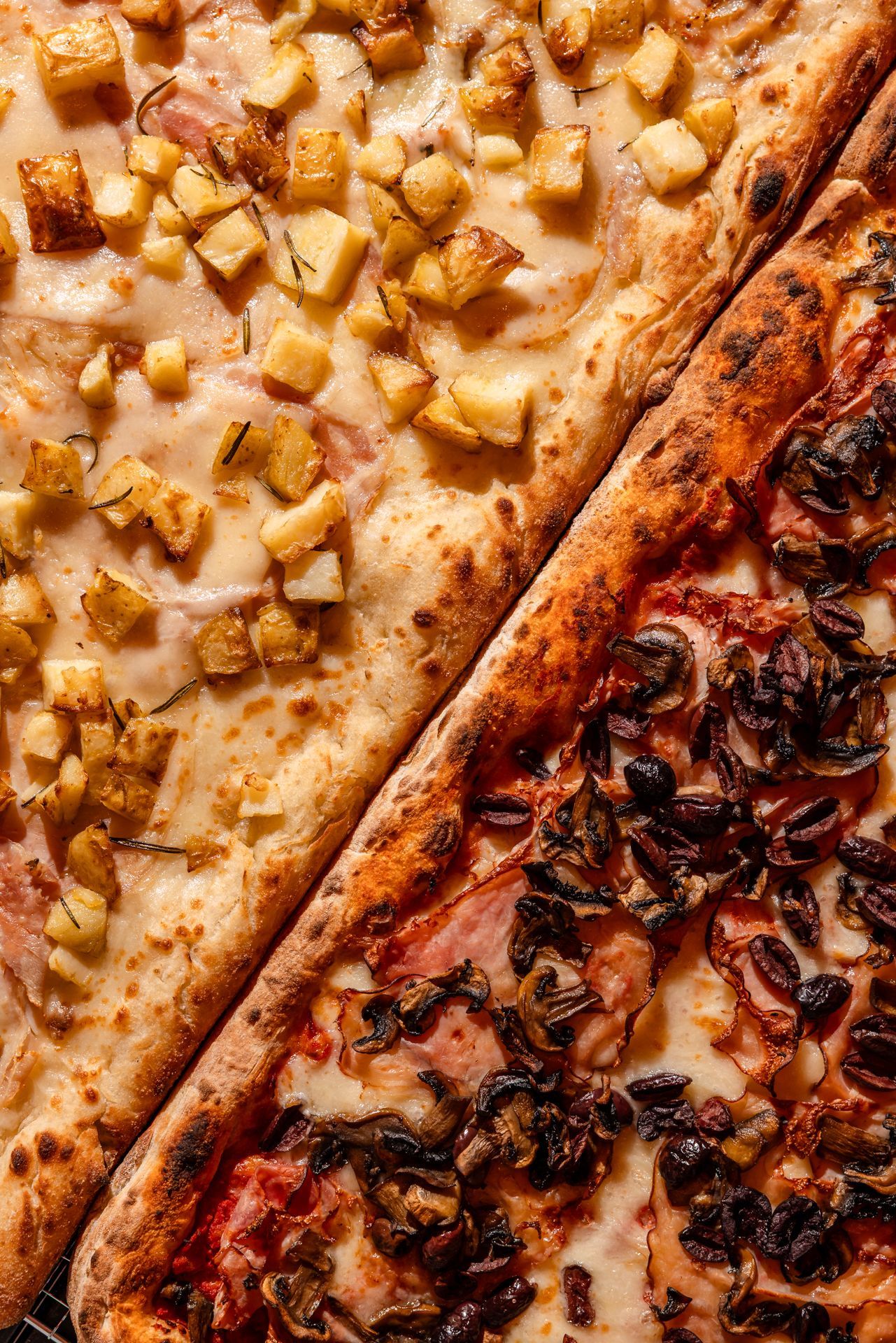
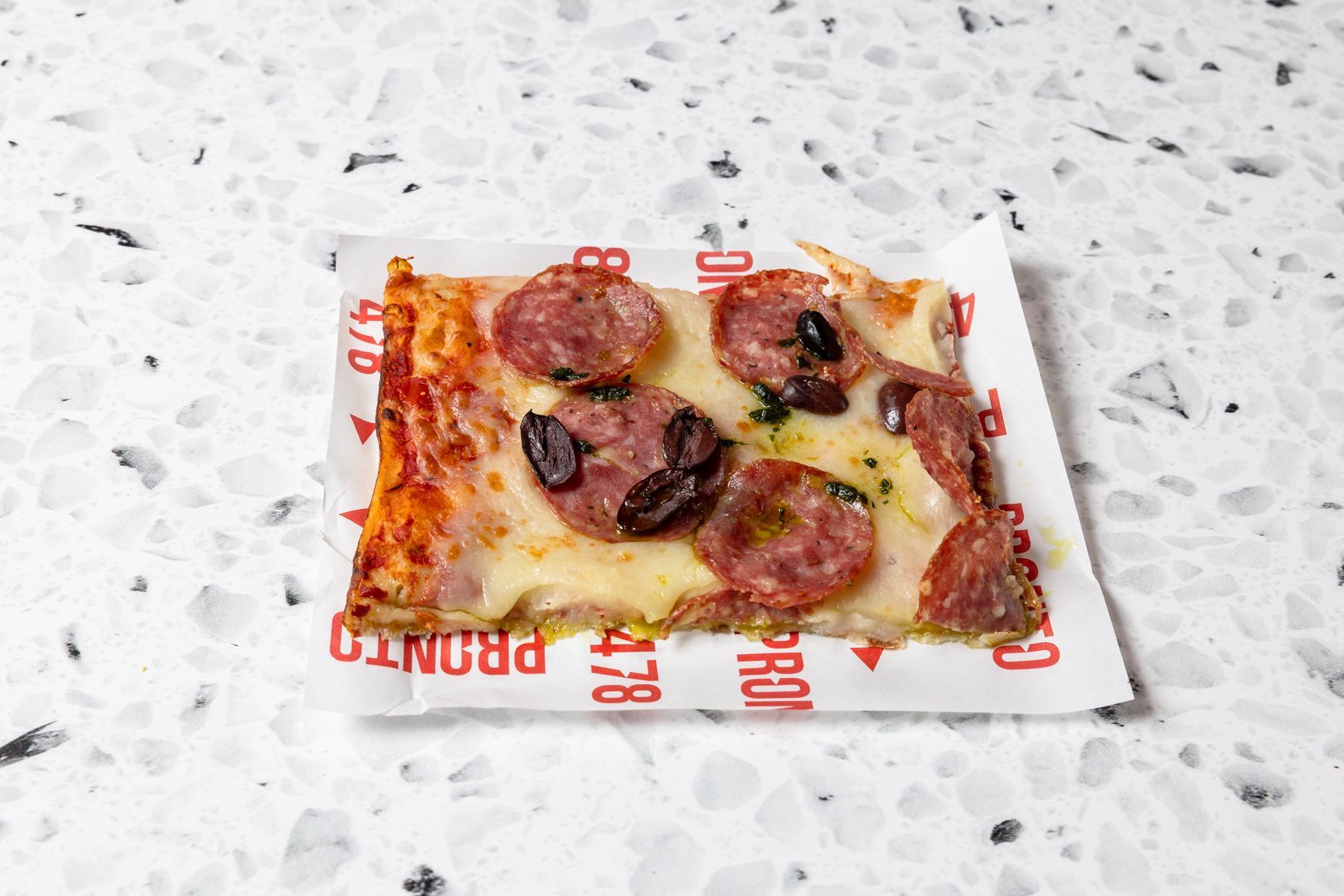
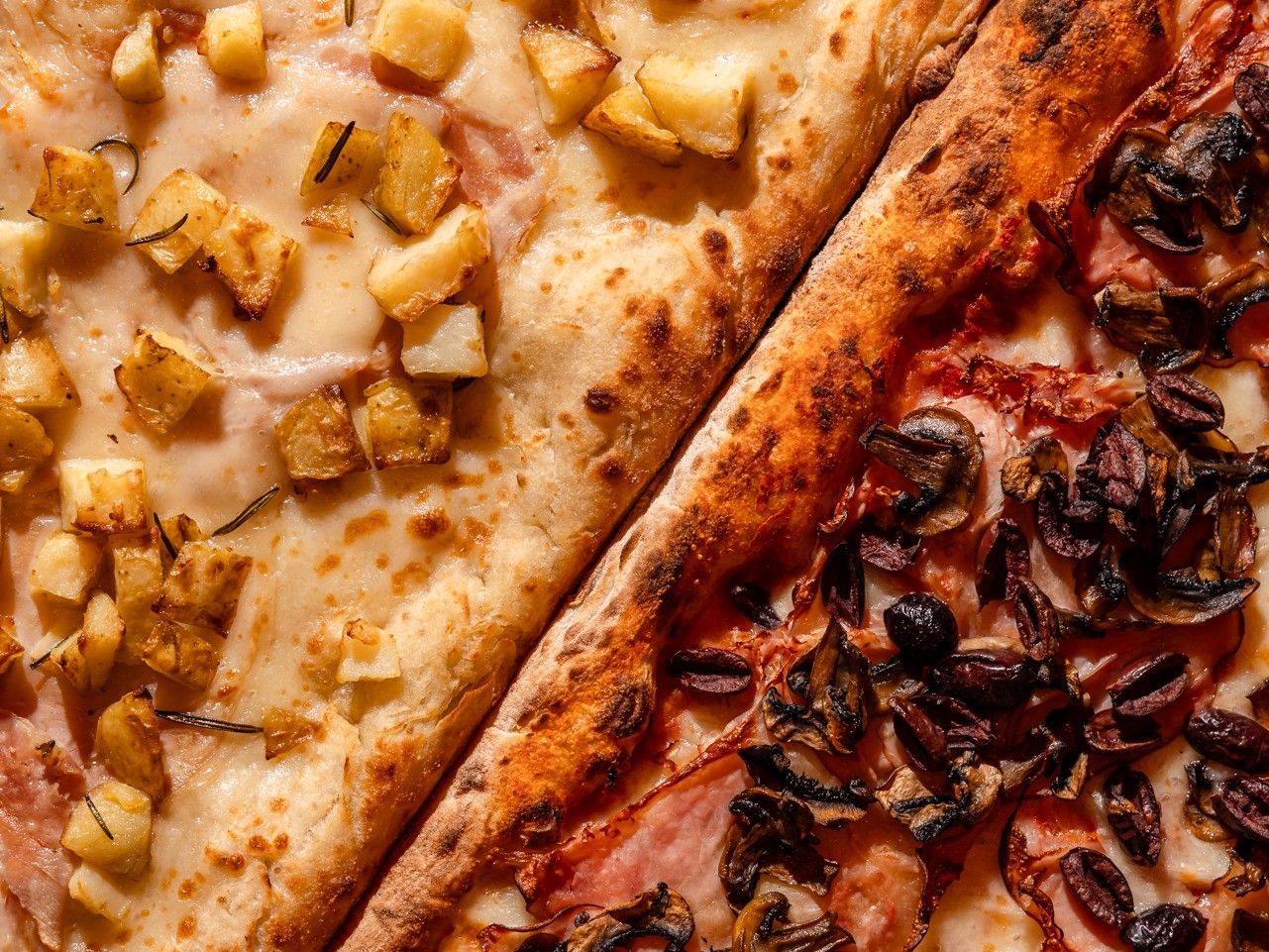
The finished pizza should be thoroughly cooked underneath so that an individual piece can support its toppings without collapsing. Modern versions can have a more pronounced internal alveolation, creating visible air pockets and a soft centre beneath the crisp exterior. This structure separates Roman tray pizza from both thin pizza tonda and softer Neapolitan styles.
Pizza al Taglio: Roman Pizza Sold by the Slice
Pizza al taglio means pizza "by the cut" and is closely connected to Rome's bakeries, where bread-making knowledge developed into large rectangular pizzas baked in trays. Customers choose their preferred flavour and portion size, which is traditionally cut with scissors and often priced by weight.
Over time, the preparation became more technical. Long fermentation, carefully selected flour, higher hydration and precise baking create the distinctive structure of Roman tray pizza: crisp underneath, light and airy inside, yet firm enough to support generous toppings without collapsing.
Understanding the Texture of Roman Style Pizza
Texture provides one of the clearest ways to understand Roman pizza. With pizza tonda romana, the objective is a very thin base with a dry, clean crispness rather than the soft centre and inflated edge associated with Neapolitan pizza.
Roman tray pizza has a different texture from the traditional thin, round version. Because it is baked in a tray, it is generally thicker, with a crisp base and a lighter, softer interior. The dough develops visible air pockets during preparation and baking, giving each slice more height without making it feel dense or heavy. This contrast between a crisp exterior and an airy centre is one of the main characteristics of Roman tray pizza.
Roman Style Pizza vs Neapolitan Pizza: Key Differences
Roman pizza and Neapolitan pizza are defined by different textures, an important distinction when explaining What Is Roman Style Pizza. Neapolitan pizza is known for a soft centre and pronounced cornicione, while pizza tonda romana is thinner, flatter and significantly crisper. Roman round pizza therefore has less vertical rise around the edge and a firmer base.
The comparison changes again with Roman tray pizza. Its higher hydration produces a more aerated crumb, yet the underside remains crisp because the dough is baked directly against the metal tray.
These differences are useful when reading an Italian restaurant menu, because "Roman style" does not simply mean a thinner version of Neapolitan pizza. Dough hydration, thickness, fermentation, shaping and baking method create a substantially different finished pizza.
Discover Italian Street Food at Pronto 478 in Bentleigh
From the thin and unmistakably scrocchiarella Pizza Tonda Romana to Pizza in Pala and the airy yet crisp Pizza in Teglia, Roman pizza includes a family of styles connected by three important qualities: texture, lightness and crispness. The variety found across these styles provides useful context for What Is Roman Style Pizza and shows how pizza in Rome became closely connected with everyday eating, enjoyed at a table, taken home or eaten while moving through the city.
This Roman pizza culture is part of the inspiration behind Pronto 478 in Bentleigh. The approach respects Italian techniques and traditions while preparing the food in Australia with carefully selected local produce. Located at 478 Centre Road, Pronto 478 brings this influence to a broader Italian street food offering that includes pizza, fresh pasta, panini, arancini, and other Italian favourites for takeaway, delivery, and casual dining. Rather than treating Roman pizza as simply another pizza style, Pronto 478 reflects Rome's distinctive approach to making and enjoying pizza.
Pronto 478 also provides catering for private and corporate occasions, with a selection that can include handcrafted pizza, fresh pasta, panini, and Italian street food.
Frequently Asked Questions
What Are the Main Types of Roman Style Pizza?
One of the principal styles is pizza tonda romana, the traditional round pizza characterised by a very thin, crisp base with a little raised crust. Another is pizza in teglia, which is baked in rectangular trays and can range from relatively low and crisp to thicker contemporary versions with a more open crumb.
What Is the Difference Between Pizza in Teglia and Pizza al Taglio?
Pizza in teglia and pizza al taglio are closely related terms, but they describe different characteristics.
Teglia means tray, so pizza in teglia identifies the baking method. The dough is spread into a rectangular metal tray before baking, which helps create its characteristic crisp underside. Al taglio means by the cut and describes the method of sale. The customer selects a portion from a larger pizza, which is cut to the requested size and traditionally sold according to weight.
What Are Common Toppings for Roman Style Pizza?
Toppings depend on the particular Roman pizza style. Pizza tonda romana commonly appears with familiar combinations involving tomato, mozzarella, anchovies, mushrooms, sausage, prosciutto, artichokes and seasonal vegetables. Zucchini flowers are another ingredient associated with Roman cooking and can appear when in season.
Pizza al taglio offers greater scope for variation because several large trays can be prepared with different combinations. Potato is particularly common, often paired with rosemary, while vegetables, cheeses and cured meats are also widely used.
Conclusion
Roman style pizza is best defined by its texture and preparation rather than one fixed shape. What Is Roman Style Pizza becomes clearer when comparing its main forms. Pizza tonda romana has a very thin, crisp base with minimal raised crust, while pizza in teglia is baked in a tray using higher hydration dough, resulting in a crisp exterior and a lighter, more aerated crumb.
Pizza al taglio adds another important element to Roman pizza culture by turning larger tray-baked pizzas into individually cut portions. Together, these formats demonstrate the technical diversity that has developed within Rome's pizza tradition.
For diners interested in Italian street food in Bentleigh,
Pronto 478 offers pizza alongside fresh pasta, panini, arancini and other Italian favourites. Visit Pronto 478 at 478 Centre Road to explore its current selection.